Monthly Archives: October 2014

When we think of Segregation

TD_College_BlackSorority3_1

So this morning I googled the word segregation and of course the first few links that came up were around racial segregation in America.  Jim Crow, Brown VS Board of Ed, a story about a return to segregated schools in America on PBS.org.  In fact when we think about segregation, racial segregation as originally instituted by racist whites in America is the first thing that comes to mind. At least it does to mine.  I’m not even going to insult your intelligence by asking if you know the answer to the question I asked yesterday. We’re all smart people here. There is only one group of people who benefit from segregation and racism both at the time it was implemented and to this very day.  Let’s just get to my point and talk about how segregated experiences work right now and how it could have worked then. And when I say work, I mean succeeded. What you have to keep in mind though, is that in so many ways, the sickness and self-hating psychology of white racism which is essentially racism itself, the same way that segregation is essentially defined as racial is such that any attempt to organize separate services, resources, job opportunities, education and cultural institutes more based on the needs of people of color which are vastly difference from those of us who identify as white is always classified by whites as “reverse racism.”

Let me be clear on my position here.

REVERSE RACISM DOES NOT EXIST

BLACK PEOPLE DO NOT HAVE THE POWER TO BE RACIST

Bard College, circa 1990s. I was a part of the Black Bard Student Organization there and friends with the Vice President of the organization. I’ll call him Malcolm which was incidentally the name of the president of the organization. I was also friends with a Jewish girl who was incessantly clingy with me because she thought my “Blackness” was so cool. I have to say that she didn’t know from “Blackness” if I was her example. The Black people I hung out with had no love for her or any of the other white people I hung out with.  Because of my upbringing, I’ve always had crossover appeal but I never tried to get my Black friend and white friends in a Kumbaya circle because I knew that shit was just not realistic. That is what College Campus student organizations are for. That’s why Black colleges, Fraternities and Sororities exist.

You cannot take a person of color who has been in the “minority” all their lives and who has been taught the history of White America, and if they are lucky some post Slavery Black history, is flooded with media which posits that the only standard of beauty, femininity, intelligence, masculinity, self-worth and love is represented ideally by white faces and throw them together with White people and think everything is going to be lovely. People of color continue to be lied to and kept from the truth about the richness, wealth, brilliance and beauty of their vast culture. White racism has made that a certainty.  The sad truth we all know is that there is very little in American Culture that is actually American. The majority of it was stolen. But back to Bard College and BBSO.

So my Black obsessed Jewish friend doesn’t understand why she can’t be a part of the Black Bard Student Organization and I have to say she was not the only White person who felt this way. There were several other white students who thought their saggy pants, backwards baseball caps and appropriated slang and socialization with people of color (some for the first time ever) should give them access to this world because they weren’t “White like that.” But according to “Dear White People”  Whites already have a club. It’s called Mass Media.  But I wasn’t so racially minded in those days. I actually never did think so much about race until I was at Bard College and a minority in a school for the first time in my life.  Even then I was more of a “we are all human first” kind of gal.

That was my first mistake.

Lessons in Non-Equality and Why Segregation Often Works: Part 2

-Colored-_drinking_fountain_from_mid-20th_century_with_african-american_drinking

Merriam Webster gives the following definitions for the words Equity and Equality

Equity:

1:fairness or justice in the way people are treated.

Equality:

1:the quality or state of being equal

I do wish that Merriam Webster would go into detail about exactly how the state of being equal is defined but since it doesn’t I will venture to come up with my own definitions of equality as I have come to understand them.

I believe that in nature, no two things are ever created equally. I believe there are scientific studies which have posited this opinion. To me it makes sense. Not even identical twins are actually the same in all ways. They can look the same in appearance right down to their DNA strands but they are still not equal. They’re not the same person. Twins are two different people but they need the same things as any other human being in order to survive and thrive. Family, friends, community, education, spiritual guidance, opportunity, livable wages, etc.

The sexes no matter how it is you understand the construct of gender are not equal. Men and women are different and no amount of masterful renditions and reiterations of the song “Anything I can do” can change that fact. Men and women are not the same and if we were, what would be the point of our evolution and development? How would we serve one another or learn about who we are? In order to be in relationship or learn from relationships, we have to have something or someone outside of ourselves to relate with. Differences are necessary to that end; differences in species of plants, animals, atoms, stars. We are all made up of a unique combination of similar concentrations of energy. Differences are necessary in my opinion because ultimately they can be used to discover and reveal similarities and the benefits of balancing both as a way of navigating life harmoniously without a system of evaluation which quantifies or categorizes one experience as being worse or better than another.

Tulips don’t wish to be dandelions. Fish don’t wish to be horse. They are what they are and they stay the course. They know what environment, what food sources and what systems of regeneration, socialization and development serve them best. But that is nature, not humanity. Humanity is the branch of nature blessed with free will.

I’m going to make a huge leap here.

Racism

: poor treatment of or violence against people because of their race

: the belief that some races of people are better than others

:  a belief that race is the primary determinant of human traits and capacities and that racial differences produce an inherent superiority of a particular race

Now who would go and create something like racism? Who would actually think to create, institute and perpetuate a system which says that one form of life based on the concentration of pigment should be treated inhumanely, beaten , tortured, raped, lynched, castrated, bought, sold, mentally and emotionally traumatized, stereotyped, stigmatized, followed around in public suspiciously, incarcerated for life in massive numbers with no hope for rehabilitation, treated like animals in the country his ancestors built, laid the foundation for, died for, bleed for? Who would do that? Who would create a system of laws which segregates one form of life based on a color, not so that they can create and build a community for the education, socialization and spiritual, cultural re-connection that is necessary for any life form which is uprooted, stolen, bred for slaves, torn apart and had its family structure obliterated but simply to say, “we brought you here against your will to serve us but you do not deserve to be given what you need to survive.”

Who the fuck does some fucked up, sick, dysfunctional, barbaric, unnatural shit like that? In other words who created a system of horrific inequity among those within it’s own species that are equal in biological category?

Still with me?

Next: When We Think of Segregation

Lessons in Non-equality and Why Segregation Often Works: Part 1

Earth Life

Have I lost you already?

Well if not just bear with me. It’s going to take me a few entries to work up to my point here (and I do have one) and when discussing touchy subjects like segregation and “equality I’m a fan of starting out with relatively simple examples that are easy to grasp and that most of us would agree are typically universal truths.

Let’s start with life forms and eco systems. Most of us can agree that different life forms, plants, animals, trees, reptiles, insects require different sources of energy and environmental sustenance to survive and thrive. Right? There are some plants and animals that have been imported and breed in non-native regions so we also know it’s possible to see life which had its genesis in one region, say South America growing and thriving in another region of America.

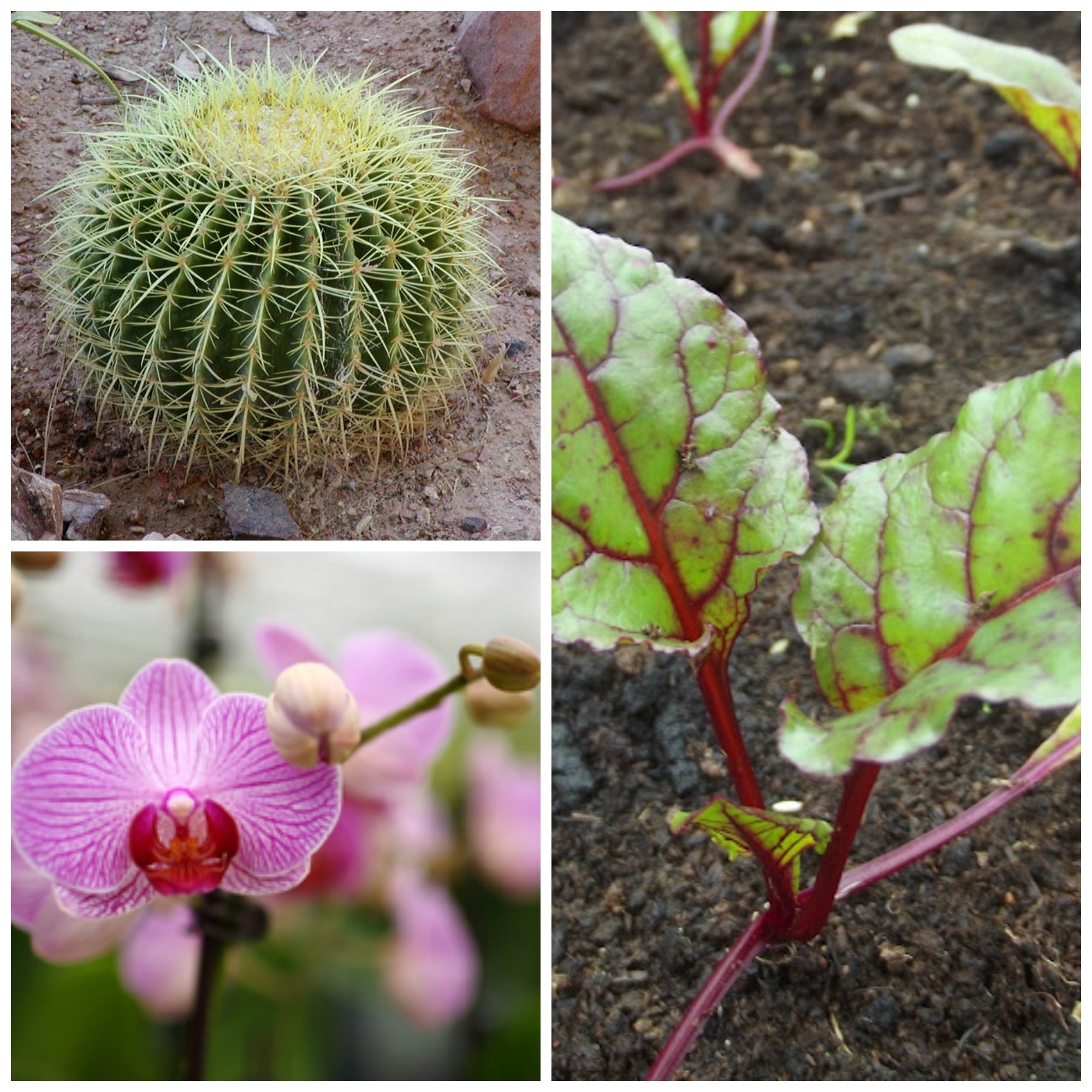
When you visit most any major Botanical Garden in America you will see the hot climate desert plants in the greenhouse where the environment is kept arid and moist. Domestic Cacti plants are perhaps the easiest plants to take care of because they need very little water. You over water a cactus and you could kill it. On the opposite spectrum are those plants that have very specific needs. It may not be enough to just water them every day or twice a day and leave them in the sun. The Phalaenopsis Orchid is such a life form. It’s rumored to be the easiest orchid to care for but you do have to pay considerably more attention to caring for it than you would a small domesticated cactus plant.

Now let’s consider a root vegetable like the Beetroot. Root vegetables rely very heavily on nutrients that come from the earth so it can be naturally assumed that the soil they live in is treated differently than the soil in which Orchids and Cacti or generally grown.

Years ago, when I lived with my family in the Bronx, we had a nice sized plot of earth in the back yard in which we planted tomatoes and peppers and squash among other things. And I remember that because we did not plant the squash far enough away their long tangled vines choked out a lot of the tomatoes we had planted. We weren’t experts and hadn’t anticipated it. Squash needs a lot of space. Certain varieties have vines with fine and curly creeping tendrils. It’s not like they mean to suffocate other plants. It’s just the nature of the way they grow.

Now, those examples being given, can we agree that Orchids, Cacti and Beetroots are not equal? Yes, they are all plant life forms, but they require very different nutrients, amounts of light, water and food to survive.  I’m certain that any skilled botanist and or farmer would not advise planting cacti, orchids and Beetroot side by side either. But! They could probably survive under the same roof.

Okay, I’m going to give you the rest of the day to let all this sink in and then return tomorrow with part two.

You might be thinking: Is this chick really going to compare people to plant life?

Maybe…Stop jumping ahead!

Black Girl YA Circa 1980s

31DK27THRSL

As a little Brooklyn born home-schooled vegan I was enrolled up the wazoo in extracurricular activities, from Gardening at BBG to art classes at the Brooklyn Museum to the Reading is Fundamental Book Club at the Brooklyn Public Library. I was a born bookworm. I don’t know how old I was when I learned to read but I suspect it was quick and early. I started writing poetry when I was eight.

For me, getting a card at the Brooklyn Public Library was like gaining entry to the first club ever that I ever felt I completely belonged to. I remember them typing up all the info on it, my name address, phone number and then laminating it and telling me all the rules about due dates, borrowing limits and such. Oh, it was like getting the keys to the kingdom. And I read voraciously, particularly YA, and at an age when I was neither preteen nor young adult. LOL! But if you were like me, a young brown girl with a huge reading appetite, you noticed that there was a glaring absence of Black faces in the worlds of Francine Pascal, Judy Blume, Ellen Conford, Paula Danziger, Maud Hart Lovelace and the entire Sweet Dreams series. “Rainbow Jordan” by Alice Childress stands out a lot in my mind but I was deeply irked that it was like the only book I ever saw on the shelves with a Black face on it. It appeared and reappeared but nothing else with a Brown face on it ever did. And to be honest I did try to read and just wasn’t feeling it. But there was nothing else to compare it to!

So I kept reading more authors like the ones listed above and I was an avid fan of them all. I mean like many girls White and Black alike, I came of age with these characters and they will forever remain embedded in my literary DNA with a lot of warm deluded memories. But one day while I was in line at the RIF club looking through books to take out I saw the first ever Black face I had ever seen on a Sweet Dreams paperback and I flipped out! “The Truth about me and Bobby V.” by Janetta Johns.

Oh I was soooo excited!!!! I was elated! It was about a dysfunctionally shy gangly Black girl who lived in some inner city USA. She had just adjusted to being in a new, tougher High School with the help of her tougher more outspoken BFF Bobby V. when her parents announce they will be moving the whole family to a predominantly white suburb where she dreads having to start all over again.

I read that book more times than I can remember. I’ve read it as an adult. I own a copy that I ordered on Amazon for posterity. One single Sweet Dreams book about a Black girl, Copyright 1983. Sure, she was a light skinned girl of the variety that corporations targeted for sanitary napkin commercials in the 70s and if I had to break down the whole story, I realize it doesn’t take on race relations in any radical way. But still. She was one brown face in a sea of white girls. And that was extremely important for me as a reading junkie and as a Black female and it still is now.

10/7/2014

What place freedom?

What kind of world do I want my unborn daughter to grow up in? It’s a question I’m asking myself more and often lately. And it kind of scares me.

How do young Black girls come to love themselves if they ever do? I know way more about how they come to hate themselves and each other. Though I have never hated my skin color, I myself struggle all the time with the crippling tendency to identify my value with how I look each day, my weight, hair, make-up, clothes. It’s an ongoing process. In my searching and my studying about the power of the human heart and mind, I understand that these things are only transient, fleeting symbols in our lives. But when I’m in the thick of these illusions on a daily basis it’s a real challenge to remember that these images are not who I am at the core. It’s even harder not to always be angry, disappointed, cynical and even a little apathetic to the oppressive nature of racism and the ways in which it subtly and systematically pumps out the message that people who look like me are not as important, valuable, lovely, integral and human as those who identify as white.

And let me be clear. I don’t hate white people. Just by default of the nature of the way I was raised, (home schooled and vegan) I often have a lot more in common with some white people than most blacks until I don’t. But I’m still uncomfortably aware of the way racism and white privilege work to stereotype, demonize, dehumanize and destroy the character of people of color in ways that have not changed since slavery. I am a woman of color and as such I fall into a category which is largely stereotyped, marginalized, brutalized and undervalued to the end goal of mental, emotional economical and political obliteration. It is the evolution of slavery.

This weekend I was hanging out with six lovely ladies at the house of my good friend and academic mentor. We were eating this great chili that her daughter made and chatting about topics like the inhumanity of incarceration and the experiences of mixed race children and how they make their way in the world. Some time later in the evening I started talking about being a home schooled vegan who graduated from a charter high school. Incidentally her daughter also brought up her experience at something called the Afrika School. I asked her what that was and what emerged was this realization the both of us were raised by women who took us to institutions to educate us about African heritage outside of the system of Westernized indoctrination and education which leaves out completely the stories of African Culture pre Slavery time. We were both enrolled in African Dance, Art and drumming classes as well as holistic and alternative practices like meditation, chanting, smudging, vegetarianism, veganism, cleansing, crystal healing, altars prayer and a respect for feminine energy.

But we never talked to our peers about these experiences. And though we never put them down we also never shared them, revered them or boasted about them. That’s another thing we had in common. I think we both agreed that while we didn’t regret it, we also didn’t know how to fit what we had learned from these experiences into the world we existed in where the majority of young black women and men did not receive his kind of tutelage. And when you already feel strange, or odd, or different from people as a young person for whatever reasons, it’s rare that you make the decision to be your “self” not knowing who that is yet or to share stories which would potentially alienate you even further. In High School, fitting in is about being like everybody else. College is about “reinventing” yourself. It’s all a fucking marketing tool.

In any case we exchanged some of the hijinks of these experiences and had a few awkward laughs over them but agreed we were better off having had them rather than not at all and I told her that I would be interested in interviewing her about our shared experiences at some point. I think it’s important to have a space of comfort and pride with which young black women take part in self affirming practices. I feel bad that  as a young person I was not more out of the closet about my time at the Shrine of P’Tah learning about Imhotep, the pyramid architect or at the Fanny Lou Hamer institute learning more about Black Educators with a small group of young people whose parents had the same ideas my mom had. I might tell myself I wasn’t embarrassed about these experiences but if I wasn’t why would I choose to keep it to myself?

Two reasons.

1. Popular culture aka white identified systems of oppression,  never brought it up and young people respond to popular culture even if they live under a rock.

2. I was embarrassed to share things that were not discussed in popular culture.

I do hope that by the time my children get here, this is no longer the case. But in the meantime I have to do what I can to make up for all that I kept to myself by staying connected to those with like-minded ideals for the promotion of spiritual and historical education of young Black hearts and minds. And while I do that I have to confront and dismantle any residual shame or embarrassment that still exists in me over the possibility of not being accepted by popular culture or any majority.

Playing Nice: Part 1

I used to want to be liked by everyone. I thought that was the logical goal for me as a home schooled vegan entering Jr. High School for the first time. I was dead set on doing my best impression of a girl from the era of “Little House on the Prairie” aka a polite little white girl. Who would hate that?

Answer: A lot of people. A lot of teenagers in a alternative public school in Spanish Harlem hated that. I was not a little white girl, nice or otherwise. And by the way, I am not a white woman.

For a while I blamed other people, thinking they were rude, and mean to me for no reason. And some of them were mean and rude. But I was no angel either. I just read too much Judy Blume in my formative pre-teen years. I thought I should be nice because that’s the way people should be right? But in fact, it’s not really the way that I am. I’m not really that nice. I’m reserved, detached, serious, aloof, private, as well as engaging, sarcastic (by way of defense mostly) snarky, opinionated, talkative sensitive, and playful. Niceness was just something I put on as a young woman to protect myself from confronting my true nature. I realize now that I feared my true self was completely out of alignment with the easy breezy, poetic narratives of the YA novels about white girls that I devoured in lieu of regular social interaction. Did I mention I was home schooled? I was also an introvert.

As women, the messages we receive from the media about who and how we should be are so subtle and powerful that they can sneak in through the crevices of the even the tightest most loving and progressive foundation laid down by parental guidance. For me these messages leaked in through literature and television. Clearly I was heavily influenced by “Little House on The Prairie” although now when I think of it, Laura Ingalls, the main character was a rebel by nature and not at all an example of a passive, submissive nice girl. She was my favorite character. But everyone, her family, her church, her teachers, were always telling her to be “nice” and to try and get along with peers whom she constantly butted head with.  It was what was expected of decent, respectable women then and as much as we like to believe that’s changed, it’s still expected now. But as Life as I know it mentioned to me in a conversation we had recently, the same has never been expected from men.

Catching more flies with honey than vinegar is a term more often directed at women as a way to point out that asking for what you want is not enough. You have to do it with a smile and a sing song voice otherwise you are thought to be cold and unyielding. But in men this is a quality that signifies strength.

How many times in the workplace are women expected to do the kind of things a wife would do for a husband and children with no complaint or argument? Some time ago I out-rightly refused to take on “pantry duty” in my office. I didn’t sign on for that. I am not a domestic worker. But for many this kind of refusal in a woman is a red flag. It is often interpreted as meaning, she’s not nice. She doesn’t want to help. She’s not a team player. But that’s not true.

I’ll play on the team I want to play on.

From the heart

I was walking back to the office from having lunch in the park yesterday and approaching the street where the building I work in lives when I heard “I like your hair.” On my left side and older gentlemen who appeared to be of Latin descent had fallen in step next to me. He was wearing a uniform, the company label printed on his shirt I could not recall and he had a slight accent.

“Thank you.” I said smiling. He then gestured toward his chest and said “That’s from the heart.”

“Thank you.” I said smiling more and looking at him. “I really appreciate it.” I kept walking at the same pace. He was still walking next to me yet not really with me. I let our paths separate naturally and never felt the need to speed up or say anything more. I walked into the midtown office building feeling pretty nice.

I didn’t want that moment ruined by thinking too much about it but clearly I thought about it. Not about how nice it was to get a compliment, and not about how I had been obsessing over how my hair (I have locs that I recently had colored several weeks ago) looked all day, but about how no stranger had ever complimented me before and added that it was from the heart. A man? No “what’s your number, you gotta man?” follow up? I think I was touched. He took a bit of a risk there and I felt it.

Risks are important. I think maybe if we take enough risks it might seem less like an opportunity for rejection and more like…you know…connecting, living.