Tag Archives: women

Journey into Americanah: My First iBook Read

Americanah

As a life long book nerd, I have also been a book purist for most of my life. I like books. And by that I mean physical books. I like to hold them in my hand. I like to smell the pages, bookmark, highlight, underline, make notes in the margin, stare at the cover design. I believe in holding books. That is until I read 1Q84. Then I realized that e-readers might be on to something. Still I have never read a single book on a digital device, until now.

At any given moment in my life, there are a myriad of jumbled ideas I want to examine, stories, articles I want to read, pictures I want to take, apps to download, recipes to try and games I want to play. iBook has been one of them for some time now. I really admire the fluidity with which my best book nerd friend at Life as I Know It purchases books on her Kindle and speed reads through them in a matter of days, sometimes hours. But like I said I’ve been anti e-reader since they were released. I think she has been the one person to show me how e-readers are actually not evil. And now I think they might actual be one the best uses of technology ever. She has told me that I have to read “Americanah” by Chimimanda Ngozi Adichie and usually when she recommends a book it means I need to read it.

I uploaded a sample of “Americanah” on my  iBooks app last week. Perhaps one of the truest testaments of a great writer lies in their ability to transcend the format through which they are communicating. And I have to say that reading Chimimanda’s words on my iphone, I had not one care for the fact that I was not turning pages or holding her actual book in my hands. I was transported to a very familiar world through the eyes of an African woman. And I am enraptured at her brilliant and insightful observations of American, Band immigrant life among many other things. Her attention to detail, her honesty, humor, lyricism and down to earth tone are engaging and eye opening. I’m only in the first chapter still but I can already tell I’m in it until the last page.

This will be the first book by Adichie I’ve ever read but like many of us I became aware of her by way of Beyonce’s “Flawless” track. Since then I have watched and listened to her in talks and Ted X lectures and seen the film based on her book “Half of a Yellow Sun” about the lives of two upper middle class Nigerian sisters during the Biafran war at it’s debut in Lincoln Center this past Spring. I don’t say this about people in the public eye often but whenever I see Adichie, I feel as if she is someone I would love to sit down and talk with or better yet, someone I would willingly approach to engage in conversation. And I rarely feel that way about people which is why its easy for me to recognize when someone makes an impression.

I continued reading “Americanah” at lunch in an Indian place called Baluchis where I’ve only seen Black people working and Drake’s last album played over the stereo. Reading her main character’s observations about the cultural spaces she navigated in America made me more sensitive to my own and what they really mean, how they shape what I think and how I feel, what I believe about who I am and what it means to belong anywhere.

I’m only on the second chapter. LOL!
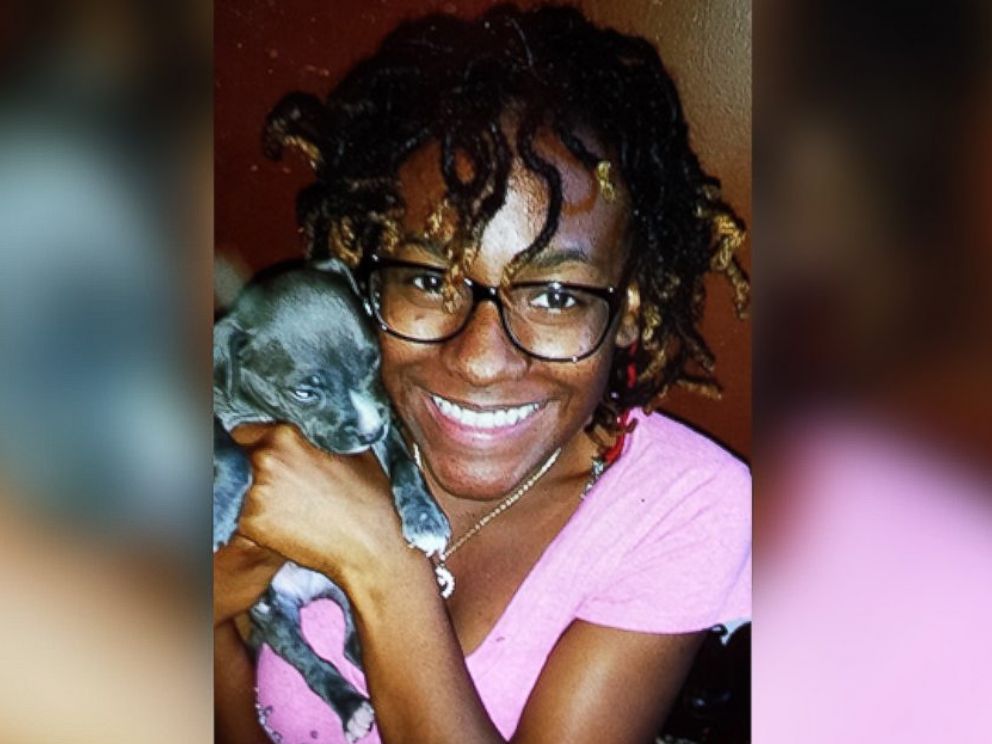
“Black Women Fight Back”

HT_Carlesha_Freeland_Gaither_ml_141104_4x3_992

That may sound like a positive statement. But as it left the lips of my husband this morning as we watched the GMA report of Carlesha Freeland Gaither’s rescue and video footage of her fighting off her abductor, I objected to his statement on the grounds that it was made generically, based on the experience of one Black Woman. Ideas like these can potentially reinforce a stereotype about the strength of all Black Women and be dangerously interpreted as “Black Women fight back. So they don’t need help.” Angry Black Women, Strong Black Women, they don’t need us.

I know this was not my husband’s intent. And I was careful to explain that I was not trying to be argumentative. When I heard him say it, I could tell he meant it as a triumphant compliment. But I heard it as yet another reason to engender Black Women in the media as “Strong” in ways that in fact, do not  empower them. It only empowers an already racially biased system to further marginalize and devalue woman of color as strong angry beasts who do not necessarily need to be protected and rescued from danger the way that White women do.

My point is simply that all Black women who identify or are identified as strong need and deserve compassion, rescue, respect, rights and value. I think it’s great that Freeland-Gaither fought back and that there is video footage to prove it but I remain perpetually and reasonably suspicious of the media’s depiction of Black Women. And I’m very wary of the way in which the coverage of this “heroic rescue” story is a potential opportunity to make others feel like my dear husband and innocently declare “Black Women Fight Back!” The declarations beg the question “As opposed to whom?” White women? And if so, then who gets to be seen as the “Damsel in distress,” another stereotype which illustrates weakness and helplessness in women yet demands immediate attention in major news networks whenever a white woman goes missing? To say that white women don’t fight back would be just as offensive, but not quite as dis-empowering.

Many women fight back against perpetrators, probably more than we know. I hope that Freedland-Gaither is an example of many more strong women whom the police force deem worthy enough to take immediate action towards rescuing from dangerous perpetrators regardless of race.

Lessons in Non-Equality and Why Segregation Often Works: Part 2

-Colored-_drinking_fountain_from_mid-20th_century_with_african-american_drinking

Merriam Webster gives the following definitions for the words Equity and Equality

Equity:

1:fairness or justice in the way people are treated.

Equality:

1:the quality or state of being equal

I do wish that Merriam Webster would go into detail about exactly how the state of being equal is defined but since it doesn’t I will venture to come up with my own definitions of equality as I have come to understand them.

I believe that in nature, no two things are ever created equally. I believe there are scientific studies which have posited this opinion. To me it makes sense. Not even identical twins are actually the same in all ways. They can look the same in appearance right down to their DNA strands but they are still not equal. They’re not the same person. Twins are two different people but they need the same things as any other human being in order to survive and thrive. Family, friends, community, education, spiritual guidance, opportunity, livable wages, etc.

The sexes no matter how it is you understand the construct of gender are not equal. Men and women are different and no amount of masterful renditions and reiterations of the song “Anything I can do” can change that fact. Men and women are not the same and if we were, what would be the point of our evolution and development? How would we serve one another or learn about who we are? In order to be in relationship or learn from relationships, we have to have something or someone outside of ourselves to relate with. Differences are necessary to that end; differences in species of plants, animals, atoms, stars. We are all made up of a unique combination of similar concentrations of energy. Differences are necessary in my opinion because ultimately they can be used to discover and reveal similarities and the benefits of balancing both as a way of navigating life harmoniously without a system of evaluation which quantifies or categorizes one experience as being worse or better than another.

Tulips don’t wish to be dandelions. Fish don’t wish to be horse. They are what they are and they stay the course. They know what environment, what food sources and what systems of regeneration, socialization and development serve them best. But that is nature, not humanity. Humanity is the branch of nature blessed with free will.

I’m going to make a huge leap here.

Racism

: poor treatment of or violence against people because of their race

: the belief that some races of people are better than others

:  a belief that race is the primary determinant of human traits and capacities and that racial differences produce an inherent superiority of a particular race

Now who would go and create something like racism? Who would actually think to create, institute and perpetuate a system which says that one form of life based on the concentration of pigment should be treated inhumanely, beaten , tortured, raped, lynched, castrated, bought, sold, mentally and emotionally traumatized, stereotyped, stigmatized, followed around in public suspiciously, incarcerated for life in massive numbers with no hope for rehabilitation, treated like animals in the country his ancestors built, laid the foundation for, died for, bleed for? Who would do that? Who would create a system of laws which segregates one form of life based on a color, not so that they can create and build a community for the education, socialization and spiritual, cultural re-connection that is necessary for any life form which is uprooted, stolen, bred for slaves, torn apart and had its family structure obliterated but simply to say, “we brought you here against your will to serve us but you do not deserve to be given what you need to survive.”

Who the fuck does some fucked up, sick, dysfunctional, barbaric, unnatural shit like that? In other words who created a system of horrific inequity among those within it’s own species that are equal in biological category?

Still with me?

Next: When We Think of Segregation

Playing Nice: Part 1

I used to want to be liked by everyone. I thought that was the logical goal for me as a home schooled vegan entering Jr. High School for the first time. I was dead set on doing my best impression of a girl from the era of “Little House on the Prairie” aka a polite little white girl. Who would hate that?

Answer: A lot of people. A lot of teenagers in a alternative public school in Spanish Harlem hated that. I was not a little white girl, nice or otherwise. And by the way, I am not a white woman.

For a while I blamed other people, thinking they were rude, and mean to me for no reason. And some of them were mean and rude. But I was no angel either. I just read too much Judy Blume in my formative pre-teen years. I thought I should be nice because that’s the way people should be right? But in fact, it’s not really the way that I am. I’m not really that nice. I’m reserved, detached, serious, aloof, private, as well as engaging, sarcastic (by way of defense mostly) snarky, opinionated, talkative sensitive, and playful. Niceness was just something I put on as a young woman to protect myself from confronting my true nature. I realize now that I feared my true self was completely out of alignment with the easy breezy, poetic narratives of the YA novels about white girls that I devoured in lieu of regular social interaction. Did I mention I was home schooled? I was also an introvert.

As women, the messages we receive from the media about who and how we should be are so subtle and powerful that they can sneak in through the crevices of the even the tightest most loving and progressive foundation laid down by parental guidance. For me these messages leaked in through literature and television. Clearly I was heavily influenced by “Little House on The Prairie” although now when I think of it, Laura Ingalls, the main character was a rebel by nature and not at all an example of a passive, submissive nice girl. She was my favorite character. But everyone, her family, her church, her teachers, were always telling her to be “nice” and to try and get along with peers whom she constantly butted head with.  It was what was expected of decent, respectable women then and as much as we like to believe that’s changed, it’s still expected now. But as Life as I know it mentioned to me in a conversation we had recently, the same has never been expected from men.

Catching more flies with honey than vinegar is a term more often directed at women as a way to point out that asking for what you want is not enough. You have to do it with a smile and a sing song voice otherwise you are thought to be cold and unyielding. But in men this is a quality that signifies strength.

How many times in the workplace are women expected to do the kind of things a wife would do for a husband and children with no complaint or argument? Some time ago I out-rightly refused to take on “pantry duty” in my office. I didn’t sign on for that. I am not a domestic worker. But for many this kind of refusal in a woman is a red flag. It is often interpreted as meaning, she’s not nice. She doesn’t want to help. She’s not a team player. But that’s not true.

I’ll play on the team I want to play on.