Category Archives: Uncategorized

I don’t feel like I’ve been on earth for almost 40 years!

40

I’ll be turning 40 this year.

I always thought it would feel different.  To be honest I felt the same way when I turned 30. I had no idea how that number related to me. I mean, it’s true, I’m definitely less limber (which is something I need to start working on ASAP) I have more lower back pain than I did in my 20s. My knees are definitely more sensitive. I can’t make more than two trips to boroughs outside of my own in one day without feeling tired and then getting whiny. No, don’t ask me to leave my house for something that starts after 8:00pm. I’m in bed clothes by 6:30.

But those are physical stamina related things, not mental or emotional stuff. I still feel like a childlike, playful, silly, crazy person who would just as soon (and will do soon) run barefoot through a meadow as attend a weekly meeting and take notes. Though I have noticed I have more weekly meetings scheduled than ever before in my life, though thankfully they revolve around projects I actually care about, not mind numbing meetings regarding things that drive me to doodle and check my IG feed under the conference room  table.

Still forty years just sounds like a long time doesn’t it? And in so many ways I feel like there are things in my life and about myself that I’m only just starting to learn about, which feels more like being born than growing “old” to me. Is that possible, that’s taken me almost 40 years to get to really know myself? My good friend at soulsistah4real quoted someone I can’t remember to me a while back, saying something like “The first 40 years of childhood are really rough.” I laughed out loud.

Continue reading I don’t feel like I’ve been on earth for almost 40 years!

What Does it Mean to be Black?

Queen Tiye

One of the topics that came up at the Soul Sistah Series “Manicures & Mimosas” event last Sunday was the question of what Blackness is. Oh it was so good!!! But it was also kind of troubling. We all know what it means to be defined by nationality. I never refer to people Latin descent by a racial category. And although Chinese, Korean, and Japanese are often referred to as the Yellow race, I never think of or make reference to anyone of those nationalities as a Yellow person. Haitians like my husband are categorically Black in America, but they define themselves among themselves primarily by their nationality the way that most Blacks of West Indian/Caribbean living in America do.

When the question was asked, “What is Black?” there was a lot of speculation, some very interesting self-made identities but nothing concrete, nothing definite.  And there was the silence of the question hanging in the air, which to me is not silence at all, but a total sense of disconnection to a part of oneself that has been denied on multiple levels for so long, first by Whites and then, quite often, by our own selves

When I think about all of the media that I believe has defined me from my earliest consciousness to now, the first thing I can identify that stands out as Black is music. My parents played Calypso, Socca, Reggae, Jazz, Funk, Pop, R&B which segued into my own love of Rap, Hip-Hop, Neo Soul, Rock and more. I got a sense of what it meant to be soulful, spiritual, rhythmic, loving, cool, funny, rebellious, and revolutionary from Black artists who were the foundation of soul and blues and Jazz (the only original “American” Art form) and passed it on to the next generation of Black artists. The origins of all popular music influence can easily be traced back to the continent. But for everything else, pride in self, a sense of connection to a tribe, ritual and culture that was inherently “Black” my mom had to get it in around all the usual white archetypal narratives that flood into our lives as Black people from further back than we can even remember.

If it were not for her being vigilant about finding children’s stories like Ashanti to ZuluAnansi The Spider, A Story A StoryCorduroyBringing the Rain to Kapiti Plain, and the series of Golden Legacy comic books created to teach children about great Black inventors, explorers and pioneers,  trips to the museum to see ancient African and Egyptian Art, taking my brother and I to the Shrine of Ptah to learn the History of Khamit and more, what would we be left with?

Elvis, Snow White, Sleeping Beauty, Cinderella, Sweet Valley High, Judy Blume, Little House, The Waltons, White “His”story, All in the Family and well I could go on but you get the point. Not to say that I don’t love these shows and didn’t love reading those books or hearing that music but what does any of that stuff have to with my roots, with where I come from, with who I am in any way other than what basic human experience declares and which was an experience denied to my ancestors during slavery, post slavery and still is in many ways? What if anything, besides music, do I connect to that tells me what it means to be Black other than all the negative stereotypes put out by White media and internalized by us in the form of self-hatred, paranoia, shame and fragmentation?

Double consciousness is a trip. And for those of us who identify as Blacks in America with no clear definition of what that means, racial identity politics often consists of a series of the most unwanted, destructive and misunderstood associations ever.

Suppose you were told establishing stories and fairy tales as a child, which included the faces of those who looked like you and those stories were confirmed by the majority of the institutions, organizations, television shows, magazines, literature, etc.  that you came into contact with for the rest of your life. This would mean that an immense and bloody effort was made over the course of hundreds of years to this day, one you are barely even aware of, (unless you’re Tim Wise) to ensure that simply by default of your skin color, you would benefit from a privilege that anyone whose skin color has been categorically targeted as a threat could never experience. And you would learn in ways you are not aware of to deny and even prevent any effort to prove this and defend every campaign to uphold it.

I live in a country built on the backs of Black Slaves. The first and largest crops of these slaves were stolen from the continent of Africa. They were ripped from their soil, their culture, their identities, their language, the very foundation of their lives, brought in chains to a foreign land and eventually over generations and struggles for basic rights came to be known as Negros, as Coloreds, as Afro Americans, as Blacks. We have been named by the oppressor, reclaimed names that remind of us of a past we were cut off from, made up names for ourselves, reclaimed derogatory names and some of us have even tried to embrace an “American” identity. Are ancestors are not immigrants who made the decision to adopt names that would strategically erase their Italian, Polish, Armenian, Latin, Greek, etc. descent so that they and their next generations could come to fall under the racial category of White. There are records of these arrivals and records of their connections to their actual heritage and identity. The same is not so for Black Americans.

I for one occasionally experience a constant internal struggle with feeling too “Black” not “Black” enough,  having too White tendencies, adapting to different spaces and, conversations and discussions based on whatever part of me is called forth to be most present in order to communicate, negotiate and chameleon my way through life and always being a bit self conscious about the things I do feel comfortable with based on the interpreted connection to what could be considered inherently a part of me.

Yeah, a mess.

I got exposed to both Queen Tiye (luckily) and the White Cleopatra played by Elizabeth Taylor. But I was never exposed to discussions, Black versions, books, music or Literature to confirm Queen Tiye’s existence. Unless Black youth are trained to be critical thinkers, to do research and get beyond the blinders of lies so readily available in the standardization of Whiteness, it becomes second nature to think of oneself as second class without even being aware of it. On many levels the subconscious effects of this imbalance are still coursing through me. And it is only through the vigilance of spaces created by women and people of color to ensure that we don’t ever continue to marginalize or own history, beauty, brilliance and worth that the richness of our broad and multifaceted identities can be re-discovered, preserved, celebrated, loved, revered and passed on for generations.

Are you self proclaimed Black woman? What do you think it means to Black?

Does the answer come to you quickly? Do you need a moment to think about it?

…silence?

Let us learn together.

soulsistahseries 

“Manicures & Mimosas” The Reality of Sisterhood

Manis & mimosas Blog

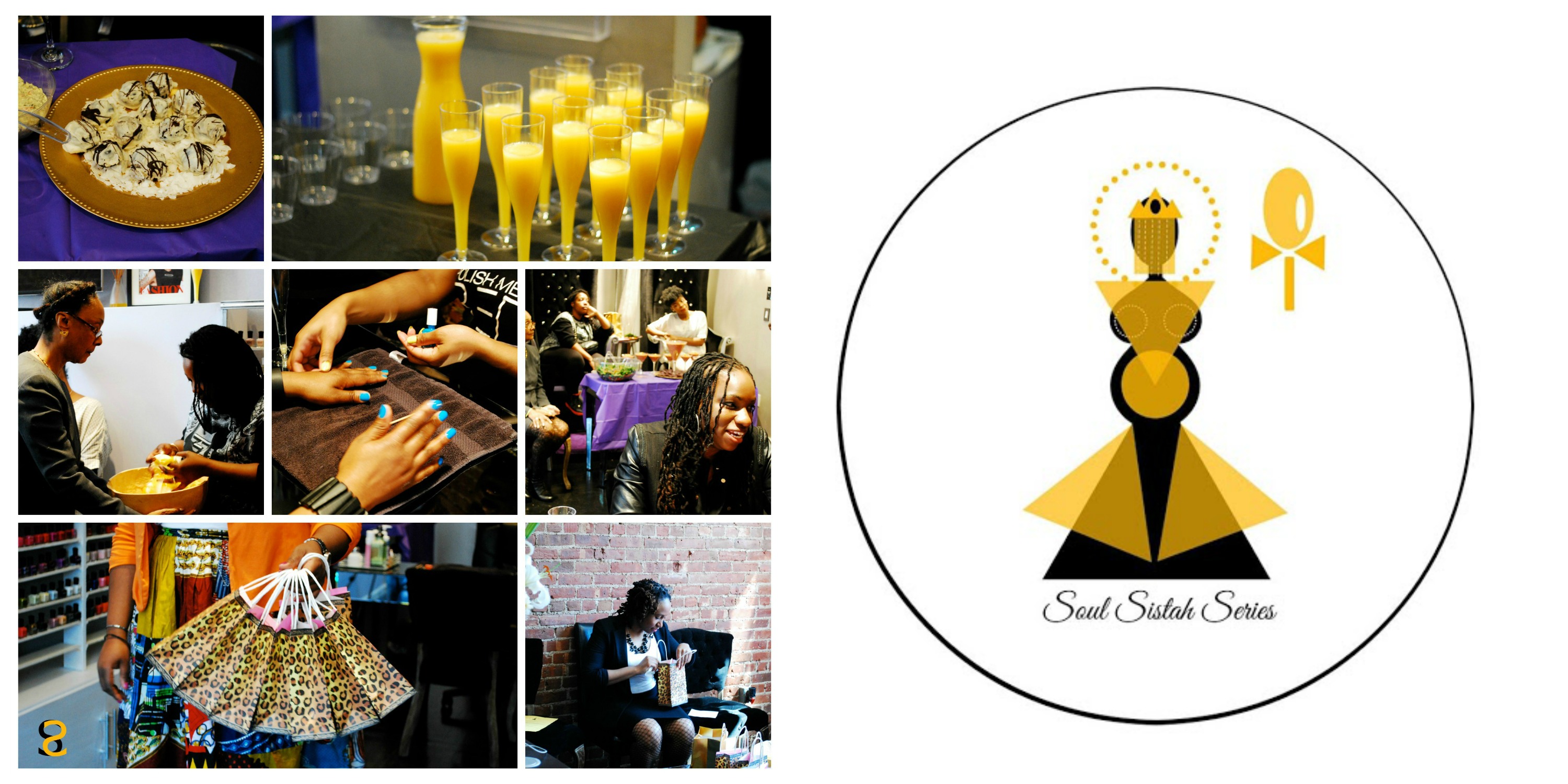
After “Manicure & Mimosas,” The Soul Sistah Series very first event this past Sunday, I had a woman come up to me and say with a beaming smile, “I’ve never seen so many women with natural hair.” Another woman told me it was exactly the kind of day she needed after the kind of week she’d had. Another women told me how refreshing it was to be able to express her views about life in a place where she didn’t feel like she was crazy for saying so.There were so many women who expressed how happy there that they came and after a while one thing became clear to me in addition to everything else.

Other women of the Diaspora want this space to exist as well as Soulsistah4real and I do.They really do! And you know what? That makes me feel less crazy for thinking this could be possible. It also gives me great *pleasure to say that our next Soul Sistah Series event in May will be twice as amazing, filled with as much pampering and enlightening challenging discourse as “Manicures and Mimosas” was.

*what brings you pleasure?

These are The Days of My Life

Denim - Shorts - Illustration_tcm64-16657

I’m thinking of writing a short story or series of short stories. I’ve been finishing up Chimamanda Adichie’s collection of short stories from “That thing Around Your Neck” which I don’t need to tell you that is freaking fantabulous. I’ve always been fascinated by successful short form writing. Haruki Murakami and Richard Brautigan are two other writers whose short works I have loved over the years.

This morning I woke up early and not as annoyed and reluctant as usual and made a list of all the things that have impacted me in the last few weeks because it has been unusually intense and highly active in one way or the other. The list came really easy to me and sounds almost like a series of episodes in a wacky television drama or collection of short stories. And I think I’m going to write them. Ya know? Like my first excercise in short form creative writing.

I imagine the format of it being like the Black female version of Brautigan’s “In Watermelon Sugar” except not in an symbolically alternative psychological universe. LOL!

Tax return meltdown
Kamaria circle grad (Spring Equinox)
Haitian funeral
Mama Drama
Cheers and inner Jeers
Patrick is pregnant
The magic recliner
Carrie gets harassed at work
“Why do we say nothing?”
Slavery and Black love
A dope cat and a dope baby
Black female friendships
My Fairy Godmother

“Inside the Glow” Soul Sistah

India Arie (1)

The time is right

For me to pack my bags

And take that journey down the road

‘cause over the mountain I see the bright sun shining

And I want to live inside the glow

 I wanna go to a place where I am nothing and everything

That exists between here and nowhere.

I wanna got to a where time has no consequences, oh yeah

The sky opens to my prayers.

“Beautiful” by Indie Arie is one of those songs I listen to at moments in my life when I need to hear something gentle, hopeful, soulful  and…well…beautiful. Because when I listen to Indie sing this song, I feel the same way I did when it was first released on “Acoustic Soul” in 2001. I feel held, supported and understood, because I know plenty about wanting to “live inside the glow” as I’m sure we all do.

Indie Arie is one of those rare artists whose appearance and presentation she never allowed to stray too far into gimmick. When she sang “I am not my hair,” it was a genuine message sent out to women of color everywhere that we should not define ourselves based on other people’s expectations of how they think we should look.

Little girl with the press and curl
Age eight I got a Jheri curl
Thirteen I got a relaxer
I was a source of so much laughter
At fifteen when it all broke off
Eighteen and went all natural
February two thousand and two
I went and did
What I had to do
Because it was time to change my life
To become the women that I am inside
Ninety-seven dreadlock all gone
I looked in the mirror
For the first time and saw that hey….

I am not my hair
I am not this skin
I am not your expectations no no
I am not my hair
I am not this skin
I am a soul that lives within

We need more Black female artists like Indie Arie who not only sing with a message about accepting ourselves for who we are within but who also lead by example. Indie Arie represents pride in her race, her culture and in the beauty of her femininity. She is always seen rocking an eclectic, Urban and African inspired look, celebrating her natural hair and gorgeousdark skin. And she has never compromised her image or her message to feed a market heavily catered to with empty, superficially packaged personalities.We are worth so much more than that and Indie Arie’s music is a brilliant and rich testament to our worth.

She inspires us in ways she may never know and I thank Goddess for Indie Arie’s commitment to remaining authentically herself.

http://soulsistahseries.wix.com/soul

Letting Mary Jane be Mary Jane

MJ

Most Tuesday nights I slip into the bedroom with a glass of wine or grape juice and watch “Being Mary Jane.” I don’t update my Facebook status and I rarely tweet about it. I just sit back and watch.

I’ve had this conversation several times with soulsistah4real, that I sometimes find Mary Jane hard to take. I wish that she was happier and that the show was less depressing. She tells me that while she sees where I’m coming from, she still appreciates the show because it depicts a reality she understands.  I’ve let that sink in for a while and continue to watch the show because I realize that just because it’s not a reality I understand, that doesn’t mean it’s not incredibly relevant. In addition to that I always try to be critical of where the standards I measure television shows come from, particularly shows featuring women of color. So I ask myself questions like:

-Why do I need Mary Jane to be happy?

-Where does my definition of happiness for female characters on television and particularly women of color on television come from?

-I happen to claim “dark” and challenging dramas and films in general among my favorites and they are usually dominated by white actors and actresses. Why do I need one of the few hit dramas on a Black television network to be more of a delightful romp?

-What is my definition of happiness anyway? (That’s a subject for a whole other blog entry)

Through my study of film in undergrad, and research I did for term papers on early Black film, it became obvious to me that because of the pervasive monopoly White America has long held over film and television studios, the visual and verbal dialogue of racial prejudice and stereotypes have become the things which Black filmmakers have either dedicated themselves to reacting to and disproving or swallowing the lies and profiting from.  As people of color begin to create more films and television programming that address our own interpersonal, social issues and struggles,  the reality that is unearthed is often tied inextricably to the daily and long term effects racism has on multiple parts of our lives in ways that predominantly white dramas do not.

“Sex in the City” the hit HBO series about the relationship challenges of white women in their 30’s and 40’s employs a large percentage of fantasy and artifice while selectively addressing issues of gender equality, sexual politics and oh, maybe there was like one episode where Samantha dates a black guy and we’re reminded that racial politics exist in this white world of fashion, sex, shopping and female bonding. Oh yeah, there are Black people in New York City ladies. Interesting. Now let’s get back to Manolos and Mr. Big.

In Mary Jane, a show about a highly accomplished Black reporter who takes care of her family, faces numerous relationship challenges, desperately wants to be a mother, and like all of us makes bad decisions that have worse consequences (like real life) why do I struggle with wanting there to be more “lightness.”

The last few episodes of Mary Jane find her making some tough and ballsy decisions for herself despite the ways in which they may be received by men who think she’s crazy, friends who think she’s gone off the deep end, family who find her exacting, snobby and know-it-all and employees who probably think she’s a bossy Black bitch with some nerve because she wants full control her own show which would cover Black issues only.

Mary Jane doesn’t have gay accessory friends like SATC’s “Stanford” who disappear with no explanation after a few seasons. She has one good friend and co-worker who is gay and going through the heartbreaking experience of seeing a relationship end because he was unable to be open about who he was to anyone but Mary Jane.  She has brothers, one of whom gets racially profiled by cops just for sitting in a parked car near a school. She has an overweight and unemployed niece with children who refuses to let her Auntie meddle in her life and yet relies on her for financial and moral support

Why should I expect these things to happen to Mary Jane and then end with her buying bags of shoes and then meeting “the girls” for cosmos.

This is not that show.

This is “Being Mary Jane.”

And I have to say, I really look forward to it, because I don’t always get what I think I want but I always get something that makes me question what I think I know about what it means to be a Black woman in America.

soulsistahseries

Go Sistah, Soul Sistah!

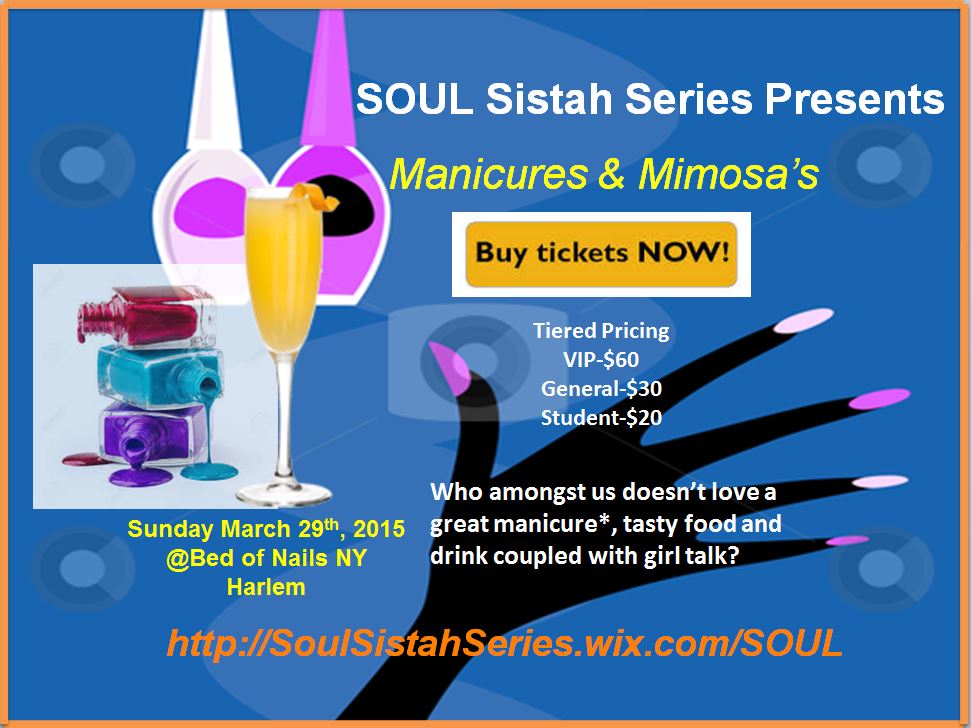
I’ve had some very interesting conversations with women of color since we created the SOUL Sistah Series page and promotional commercial for the first in the series of discussions on March 29th.

One woman whom I had asked to interview for our promo commercial declined on the grounds of personal loathing for the label “Black woman.” She was born on the continent of Africa and has a very different relationship to race than that of Blacks born in America. She said that she had experienced hatred and been ostracized by Black Women because of this. While I understood her reason for declining, I also understood why Black Women born in America would find her position offensive. I was probably one of those women not too long ago before I read Chimimanda Adichie. And to be honest I still felt a sting hearing the sentiment of not wanting to be identified as “Black.” So in a way I still feel that resentment a little but like I said, after reading “Americanah” I have way more insight into the experience of people of color not born in America and their difficulty with relating to our experience here. Being raised as the daughter of a Trini-born mother helps with that as well.

The other most recent conversation was one I had at work yesterday afternoon with a co-worker who did participate in the promo commercial. It started when she shared a bad experience she had on her previous job at a Black owned and run educational organization which lead to the sharing of bad experiences we both have had at other Black run establishments in Harlem that we regretted because we wanted so much to have the opposite experience.

Both of these conversations lead me to think about the roles these negative experiences play in what we as women of color believe about what is possible for us to achieve together, with one another and for one another. It’s like the old “Black women can’t get along” stigma. It exists to divide us before we even seek to reach out to one another. And it’s not true.

Which lead to this podcast.

Toni Morrison: Literary Giant

Toni Morrison

“In order to be as free as I possibly can, in my own imagination, I can’t take positions that are closed. Everything I’ve ever done, in the writing world, has been to expand articulation, rather than to close it, to open doors, sometimes, not even closing the book — leaving the endings open for reinterpretation, revisitation, a little ambiguity”

-Toni Morrison

The first book I read by Toni Morrison was assigned in high school. It was “The Bluest Eye.” In my senior year I signed up for a class dedicated to understanding Toni Morrison’s work. We read “Sula,” “Jazz” and “Tar Baby” a book I was obsessed with understanding for a period of time and which is still one of my favorite of her novels that I’ve read. “Tar Baby” is a broad, unfurling narrative, sprawling and unwinding from the shores of a Caribbean island haunted by the slaves who washed up there to the streets of New York and back again. Point of view shifts across race, gender and even plant species as Morrison incorporates even the island flora as minor characters and witnesses to the history and lives of it’s inhabitants and visitors.

Morrison’s literary voice is among the richest, most inventive, unique and celebrated among her peers. A single mother, award-winning author, editor and professor, Morrison has created Black female literary characters who are as complex, intuitive and supernatural as they are resilient, determined and conflicted. In their development these characters speak to a myriad of epic themes, which are often defined in large part by the post traumatic effects of slavery and systemic racism and sexism in America.

Morrison’s refusal to be pegged by critics as any one type of writer is a testament to her desire as a artist to be embraced for all parts of her multidimensional talent. On the page she spreads her literary wings and soars beyond the boundaries of monolithic chains and in doing so is an example to women of color everywhere to accept nothing less than the capacity to express all that we are.

soulsistahseries

Dark & Lovely Soul Sistah

Lupita-Nyongo-Essence-Magazine-February-2014-BellaNaija-03

“You can’t eat beauty

It doesn’t feed you”

-Lupita Nyongo’s mother

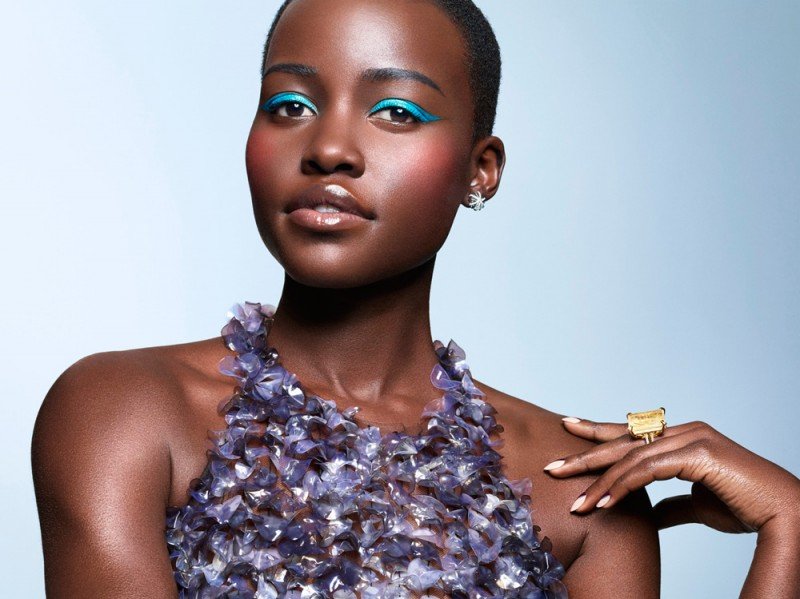
The world became aware of Lupita Nyongo in her break out Academy Award winning role as a slave named Patsey in “12 Years a Slave.” But it was her Essence award acceptance speech that really defined what Lupita has come to represent for women of color everywhere. When she shared the letter she received a letter from a young Black girl struggling with the perceived burden of her dark skin, Lupita was prompted to share her own experience being taunted and harassed because of her dark skin. She spoke of the self-hate that lead to destructive aspirations to lighten her skin as well as her journey toward self- acceptance with help from words of affirmation from Oprah, her mother’s love and compassion and the emergence of the dark-skinned model, Alek Wek.

This was an unforgettable, timely and touching moment in history, a moment when dark-skinned Black women watching everywhere were joined in the validation of their own struggles with colorism and also in gratitude to Lupita’s fearless, loving and beautiful testament to truth about beauty. Wherever she appears in print gracing fashion magazine covers and larger than life Lancome ads or on screen, lively, intelligent and sparkling with joy and curiosity, Lupita represents to young black girls and Black women alike what Alek Wek once did for her. The beauty of self acceptance that exists within is what illuminates what we see on the outside and no shade of Black, Brown or shades in between should ever be exempt from the definition of beauty.

soulsistahseries